This past week I have been talking about Lizzie a lot. When this happens, she tends to dig deep holes in my mind, leaves a trail of herself behind. I’ve been dreaming of her again: there she is at the end of my bed, there she is eating a scone, eating jam, there she is at my breakfast table, there she is holding my hand. That warmth. It wakes me.
I was in Sydney last week. I blame that trip for Lizzie’s return. Every time I thought about Lizzie, how I wrote my book, all that, I couldn’t shake the uncomfortable feeling that pinged at the the base of my neck: what part of Lizzie is me and what part of me is Lizzie?
Let me explain: I think it’s natural for writers to inject some of their own experiences into their work, give their characters some real life meat. This is definitely true for me when writing about the Bordens. I needed to find a way into that family and as I started to think about why someone would kill a family member (spoiler alert: I straight up believe Lizzie is guilty. Did she commit both crimes? Yes. Maybe. I don’t know. Did she do one of them? Possibly. Maybe. I don’t know. Did she know the crimes were going to happen? Yes. So that’s guilt, right?).
I think of love. Always. Who has it, who doesn’t. When I was carving out a space in my mind to fit Emma and Lizzie’s sisterhood, I started thinking of my brother and our childhood. The heartache that can come from growing up. This was key to understanding what a segment of their relationship might have been like. But that’s where similarities end – the rest belongs to fabrication.
Or so I thought. The more I thought and spoke about Lizzie and Emma, the more I realised an awful reality: I am in this book. Not all of me (I hate axes, naturally) but just enough for me to know that over ten years, Lizzie helped herself to some of my memories.
I know what you’re thinking. I agree, it’s very dramatic. No, I don’t really think I’m Lizzie. This is all make believe. But it can be uncomfortable to be told that your character(s) are slightly unhinged (because they are, and that’s what I wanted) and at the same time be thinking, ‘Shit. Does that mean I am too?’
Over the course of the book, my characters do and say (some) things based on experiences either myself or a friend, a family member has experienced, heard, or retold to me. I will now tell you four things that are mine:
When I was younger my father had to kill two of our roosters because they attacked my brother and me on a regular basis.
When I slept in Lizzie’s bedroom, I traced my fingers over book spines, looked out her window, looked into the yard where they say her aunt killed the children. I walked in and out of Emma’s room, stood in doorways, got to thinking what it would be like to share such a small space with someone I hated, what that might do to me.
Once or three times between grade 5 and 6, I saw a small, shadowy figure stand at the end of my bed in the middle of the night.
I used to sometimes lean up against closed doors and listen. I still do from time to time. The guilt of it.
Over the Christmas/New Year break I took some extra time off work so I could begin and complete the latest draft of See what I have done. To make things more interesting, I took the Bordens with me to Tasmania with the hope that distance from my usual writing places would allow me to discover a few more things about them.
I get sea sick. I remembered this as soon as I stepped onto the Spirit of Tasmania. Needless to say I was ill prepared for the night journey out at sea. As we rocked over waves and my stomach swam toward my chest, I remembered that Bridget and Lizzie had taken ships to and from Europe. Here was a moment to transpose my experience into the book. I clung to the railing, looked down into depth and tried to see the ocean from their point of view.
I wish I could tell you something profound happened.
I managed to take this photo of the sun setting over Bass Strait before I was defeated by the sea:
So things continued.
Tasmania proved to be exactly what the book needed. Walking around unfamiliar surrounds all day and writing for a few hours each night, I was able to give my characters something new to feast on.
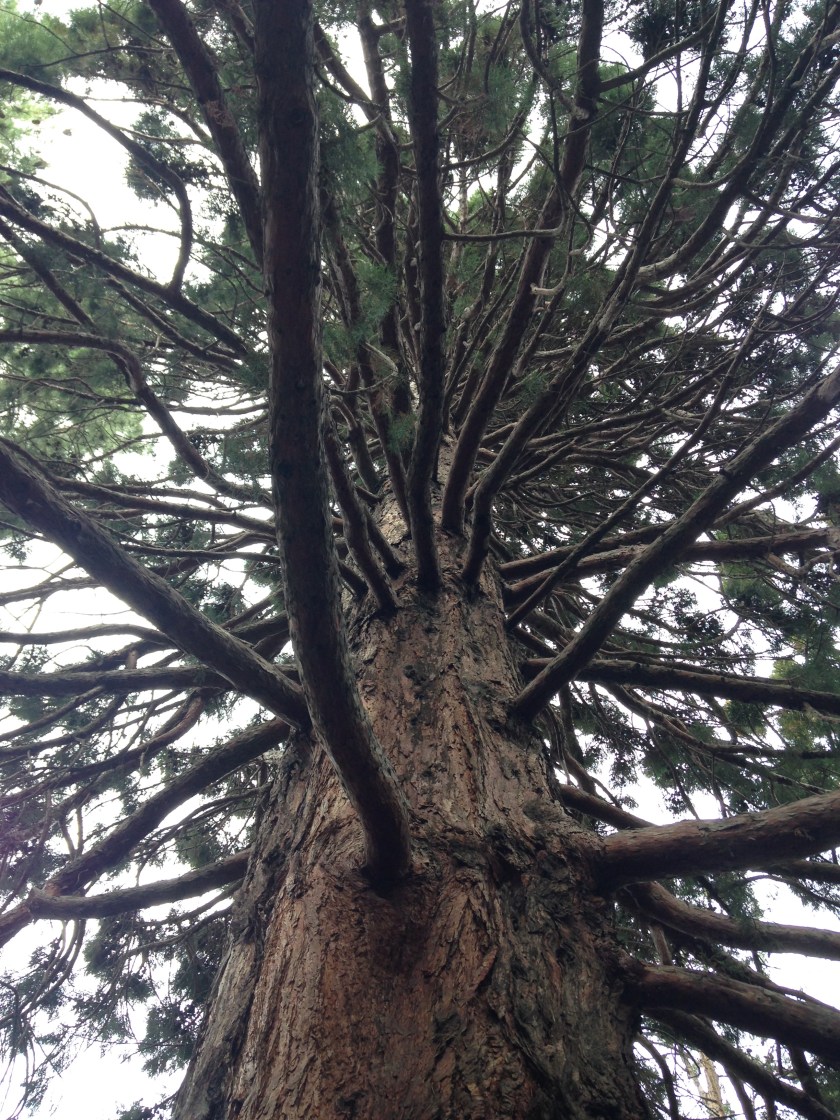
The most surprising revelation for me happened when I was exploring the Tasmanian botanical gardens in Hobart. I came across this magnificent Wellingtonia (California):
How I wanted to climb. This tree was young, around 120 years old, and I thought of ways feet could damage limbs. I thought of Benjamin, how he would tackle this wooden ship of the garden. It’s here I got the idea of how he would prove his merit to uncle John.
Next to this tree was a redwood (although now I question memory…was it a redwood or something else?) and as I skinned the trunk, it occurred to me that I hadn’t considered the type of wood Andrew and Abby’s coffins were made of. I walked on, thought of Mr Borden, his tastes, his thoughts on sturdiness. As a young man, Mr Borden used to be an undertaker. I knew he would’ve chosen wood that kept dirt out of his heart. And so after ten minutes of sizing up the North American trees in the gardens, I found the coffins.
Small revelations that can only come from exploration.
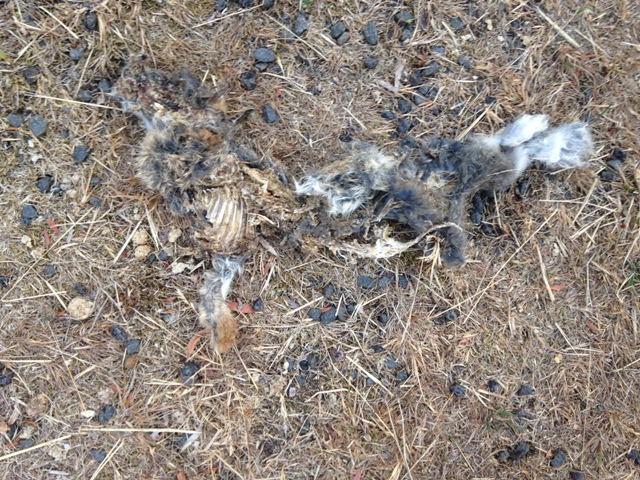
I admit I became sidetracked throughout the draft. One evening I went out searching for something Bridget could claim as her own. I came across this decomposing rabbit:
This fur and bone wasn’t for Bridget but it was perfect compost material for the next novel (which, by the way, has started to rear its head again. So much to write…)
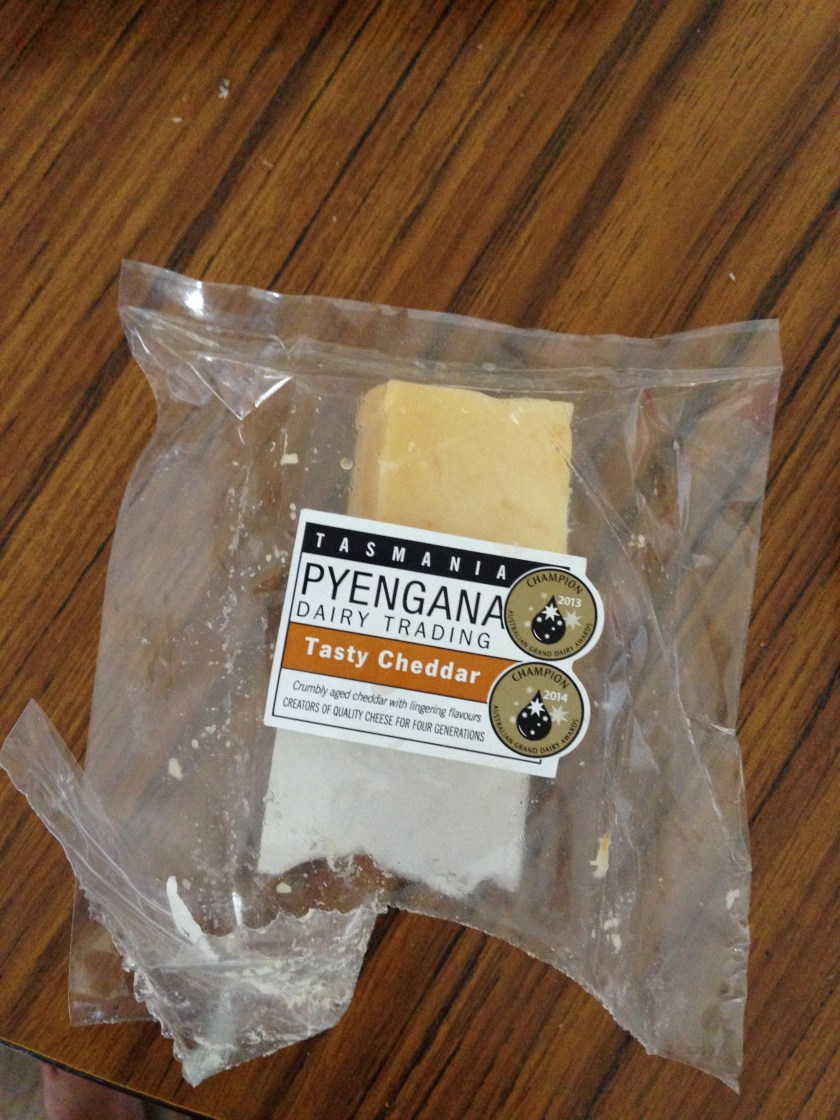
Neither was this cheese purchase afterward:
(have I talked about my cheese addiction yet? No? Oh, boy. Aren’t you in for a treat one day…)
Tasmania was full of writing treats – I’ll save the rest for another post – but the most satisfying thing was that this particular draft was completed in a way I hadn’t anticipated back home in Melbourne. I think the Borden’s and I really needed to get away for awhile.
All this to say, don’t underestimate the necessity to take your characters out of their daily routine.
Melbourne is hot. The days have been accumulating uncomfortable situations. This is not the time to be cooped up in a room working on edits of another draft. Tonight I sat down to work. For the first 30 minutes, I was feeling pretty satisfied with myself. ‘Look at me! It may be hot but I’m moving words around on a screen. I deserve a drink.’
I got said drink, came back to the screen. And here I am. Best laid plans and all that stuff. My mum called tonight. She loves a chat. My mind may or may not have started wandering during the phone call… and for some reason I started thinking about my early teen years, before ‘tween’ was invented and I was just a kid living in a creepy house reading books.
This brings me to regrets. Here is where two things collide. Last year while I was looking around the Op Shop down the street, I came across an eight to twelve year old’s holy grail. My holy grail. A box of 100 – yes, 100!!! – Baby Sitters Club books. Numbers 1 – 100. I reached out to them like old friends. The shop was only asking for $40. The holy grail.
It’s been roughly three weeks since I finished the latest draft. I haven’t written a word since. It feels strange. The usual self-loathing-writer-crap pops up from time to time: I hate everything I wrote and I now realise where some of my problem chapters should’ve gone. I’m disappointed with myself that I could only figure this out after I handed in. Complaining to a writer friend, she told me to give my brain some time to relax and free up creative space and while that’s been great (I’ve finally been able to get some reading done!) it’s made me slightly unhinged.
The first thing that happened when I stopped writing was temporary ‘loss’ of hearing in my left ear: blocked for a week, it felt like I was stuck in a thick concrete tunnel, unable to regulate how loud or soft my voice was. More than once I was told at work that there was no need to shout.
Then the dreaming started: Lizzie came every night, whispered and laughed in my ear. Every time I woke up it felt like I’d been punched in the stomach. Then a character I almost never dream about, Benjamin, started digging in through my ear and into the dark spaces. One night I woke up to see a figure standing over me, moving their long arms over my head. I could feel their breath on my face and the tap-tap of fingers on my forehead. There was just enough street light coming in through the wooden blinds for me to make out the figure was a man. I balled fingers and hand into fist, took a swing and sat up in bed. The figure walked to the bedroom door and I reached for my pillow, started swinging it around and around.
My partner woke up beside me, told me to go back to sleep. ‘There’s no one there,’ he said.
‘He’s right by the door. Look at him!’
I swung my legs out of bed, cold floorboards. My cat jumped from the bed, curled her tail around my legs, made me feel trapped at sea. The figure stood there and as soon as I stood up, it went down the hall way.
‘There’s no one there, Sarah.’
But the body knows what has been felt. I stalked the night, walked through the house. I thought of people breaking into the house, thought of them watching me as I searched. My name was called, called again, but I kept searching, unable to find the figure. It occurred to me he may have gotten in through the ceiling. I stood in the laundry, turned on the light and looked up.
I’ve seen this figure twice since that night. And every time I do, I get thoughts of the novel, all the things that still need to be done, how wrong it all feels, how weak so much of it is. It’s overwhelming to think of the failure and how I’m going to fix it.
Walking helps. And walking helped during the writing process.
Look at this jawbone I found on one of those walks:
It gave me a lot of ideas for the next novel. It also made me curious about the animal this came from: where was the carcass? Where was the rest of the jaw? The skull? I picked up the bone, was surprised by how light it was in the hand. I wanted to take it home, study it further. But did I really want to have it in the house given the dreams I’d been having?
It was on these walks that I started seeing crows everywhere, noticed the way they looked at me as I passed each tree. Crows have a memory.
I’ll say it now, writing is terrible for your health. I’m taking a few weeks off work to work on the novel. The last time I did that, i wrote 70 + hours a week and finished with a severely blocked ear, limited sight in my left eye (I’m already short sighted, so this doesn’t help) and enlarged glands. I was also unable to sleep properly. This happens every time I write in huge concentrated blocks and I’d love to figure out what, if any, is the connection between intensive creativity (or simply longer periods of time of concentration) and the weird eye, ear and throat things I get.
I decided this time around, I’d slow it down and try not to injure myself. Two days in, my ear became blocked and by the end of the week my throat looked like goitre city. So i took a morning off to visit my good friend, Netflix, and binge watch the rest of ‘Wet Hot American Summer: First Day of Camp’ hoping that would help my poor soul. No dice. All that meant was that I was two hours behind schedule and I worked up a delicious serving of writers’ guilt. This made everything worse.
Wait. maybe all this ill health is a physical manifestation of stress?
Anyway, I digress.
I was feeling guilty about not writing, especially when I needed to research some very particular ‘Irish things’ for Bridget, the Borden’s maid. But I was pressed for time and couldn’t justify spending hours and hours in libraries reading Irish history and culture. Then I had the genius idea of interviewing some good family friends who happen to be Irish and are from Cork (where Bridget is from). Best. idea. ever.
So last Sunday afternoon, I took my trusty voice recorder over to their house and we spoke about everything from naming grandparents, the potato famine and the beginning of mass exodus from Ireland, death and murder, ghost stories, Irish food, Salmon fishing, labour in Cork, crossroads, to wakes. Although not everything discussed will make it into Bridget’s narrative, I felt reassured that what I had previously written for Bridget was close to truth. I also feel that just knowing about the anecdotes told to me will help shape Bridget not only as a character but an outsider to the Borden’s.
Something I was really excited to learn about was the particular songs sung at Irish wakes. There is one song that was consistently sung to those leaving Ireland for good: Noreen Bawn. This little ditty is about a young woman who leaves Ireland , gets TB and dies. Totally uplifting.
Here’s a version of the song:
When I heard this, I was reminded of Danny Boy. I know, it’s completely stereotypical to bring up this song when talking of Ireland and musically there’s almost nothing in common, but i felt a thematic connection and I welcomed it. Perhaps I welcomed it because Danny Boy was played at my beloved Grandmother’s funeral last month. There is only one version of the song that always breaks my heart:
We also spent time talking about Keening at wakes. I’ve heard different aural interpretations of keening, from wailing, to music, and in song.
Here is a group of women wailing (and I admit, a sound I haven’t been able to shake for over a week now)
And here is a lament:
I also particularly like this version of keening:
These are some of the elements that have been informing aspects of Bridget as I write her. I’m looking forward to seeing where the next section of research leads me.
In April I put Lizzie Borden in the drawer. After 10 years with her and her family, it was time to take a long break and begin work on something new. The distance between us was easy breathing. For the first time in a long time I stopped dreaming of Lizzie, stopped thinking about the way she might move around her house, stopped wondering if she talked in her sleep. I had lost a shadow. I started sleeping in to 7 am.
Around 3 years ago, I began searching for my next project. It was exciting to think about what it might feel like to experience new characters and expand on the themes that I was exploring in the current project. That’s when the recurring dream started. A single image: a woman driving to the Blue Mountains with a decomposing child in the back seat.
I knew immediately this was the next book. The instinct was there, the way it sat in my body and hooked. It had been that way with Lizzie. Now the feeling was back. But I knew the book would have to wait until I was ready. Over the years, the woman, who I had begun to call Eleanor, would float in while I was with the Borden’s and I would jot down her ideas, put the notebook away and return focus.
Cut to April. I was taking a writers’ residency and finishing another draft of the manuscript. I finished the draft on a Wednesday and started the new project the next day. I realise now how ridiculous and exhausting a decision that was. But Eleanor couldn’t wait any more. Like turning on a tap. It was coming and I struggled to keep up. It was both liberating and frightening. It was like this: I was thrilled to be with new characters and to sound them out, explore the world I was beginning to create. I’d be writing a book entirely in 3rd person (except when I figured out that probably wasn’t necessarily the case…). I now had an awesome excuse to visit the Blue Mountains a lot.
But I also felt anxious and overwhelmed: I was at the very start of a project and it felt like I was falling through the floor. I believed (perhaps still do to some degree) I still had no idea how to write a book. Or write for that matter. There was years of writing and research ahead of me. I felt like I was falling through the floor. I knew the first draft was going to be a really bad. Really, really bad. I was beginning from scratch. I didn’t want to write a first draft, I wanted to write draft 10, close to polished. I’d have to endure a new round of people asking me, ‘How’s that novel going?’ I’d have to keep getting up at 5 am to write. I wasn’t 100% positive I knew what the novel would and could be about. I was going to have to get used to the idea that my new characters would slip into my dreams most nights, just like Lizzie had.
I pushed on. Kept going.
I knew at some stage I’d have to revisit Lizzie et al (2016 sounded pretty good to me). Until then, I’d enjoy developing the car- trip- with -decomposing -baby- project.
Things don’t go to plan.
It’s August. I’ve started redrafting. The new project is on hold.
But things are different this time. There are going to be many changes. The first, the most pressing, it to get rid of one narrator and replace it with a new one, Bridget, the Borden’s Irish maid. When the decision was made, I heard Bridget’s voice inside my ear, like she’d been there the whole time. The things she is telling me.
I am excited but anxious. I’ve started dreaming of the Borden’s again. In some ways, I have to start from scratch. The anxious brain says: I don’t know how to write a book. What the hell am I doing?
I’ll be documenting the whole thing.
Here’s an incomplete snapshot of the current process and progress. I’ll follow up with more next time:
The first night of rewriting I dreamt of Bridget. She said:
I eat my country. That sound, that air, that green. Ireland. I eat my memories, handful after handful until I am calm.
Opening lines. I’m still trying to figure Bridget out but I was surprised at how deliberate and assured she came through when writing. I think I’ve probably always had an inkling of what Bridget might have seen in the house, perhaps even speculated what it was like for her to live with such a dysfunctional family, to be the outsider. It doesn’t make the writing and drafting process any easier. It just means I can tune into her voice more readily.
This is my ‘Bridget first draft notebook’ started 5 August 2015. It’s nearly full. I exclusively write longhand before typing it all up. When I redraft, I print out the pages and write longhand on that copy as well as in a notebook (turns out not everything fits in margins and backs of A4 pages). The process is time consuming but it allows me to feel connected to the writing, like I can control the rhythm and output in a way. It also means I can edit in a particular way too – that I’m forced to be selective rather than cut and paste and hope for the best. For me, It feels natural to write like this. I find it very difficult to create on a screen in the first instance. Downsides to writing longhand: it can be hard to decipher your own writing from time to time.
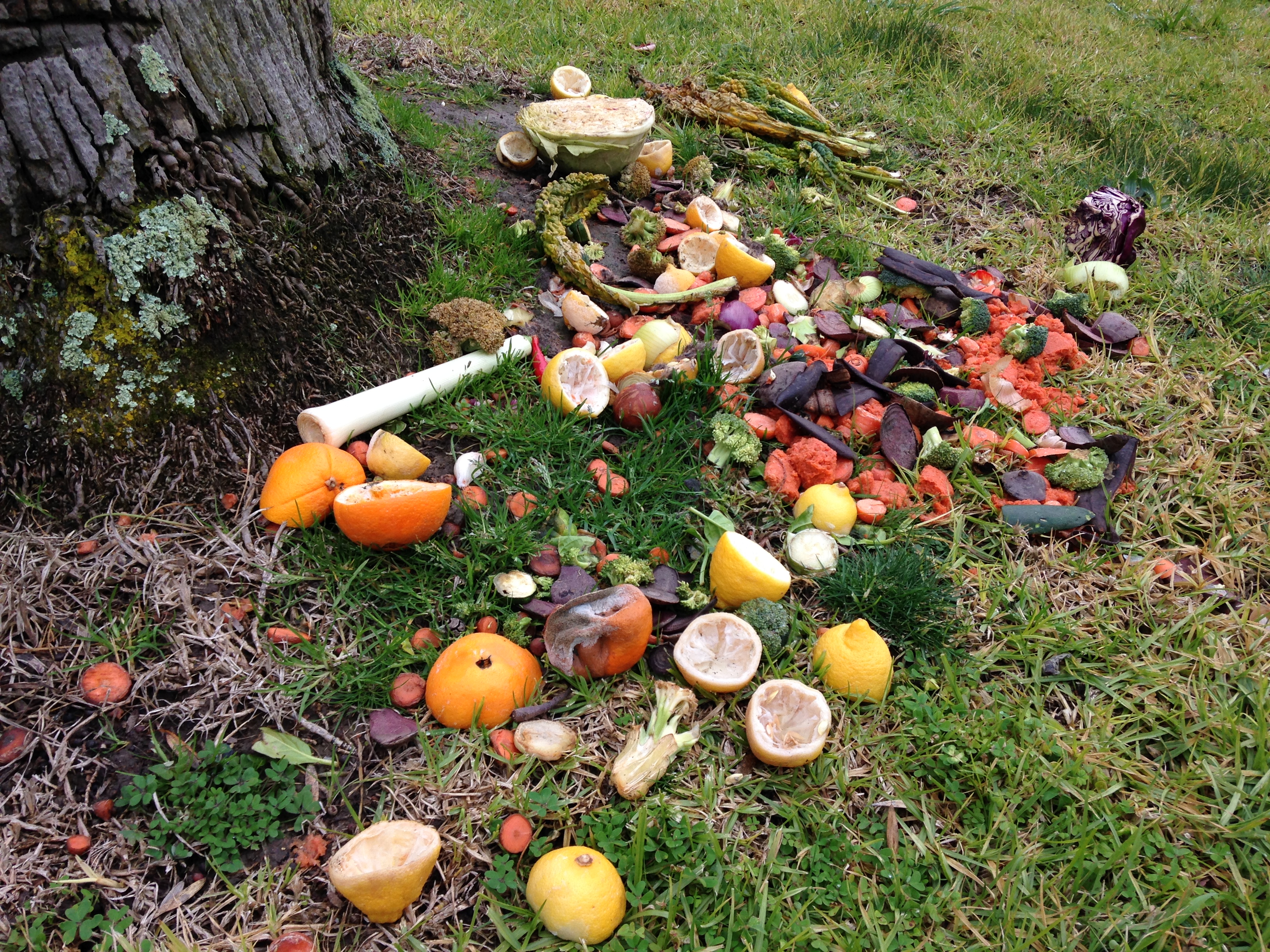
The next day I went for a long walk to try and figure out some narrative questions that were forming. As usual, I ended up at the old asylum near my house (and yes, the asylum features in the new novel. Don’t worry, I’m all over it!) Anyway, I came across some rotting vegetables at the base of a tree on the asylum’s property:
Seeing these rotting vegetables and thoroughly checking them out (I may or may not have prodded some of them with a stick and been attacked by fruit flies and other insects) gave me ideas, not just for the second project (still on hold, mind!) but for Bridget and the novel overall. I was forced to type a lengthy note on my phone before the ‘creative revelations’ disappeared:
Consider the possibility that Benjamin is just one person and James doesn’t exist. That is, no split personality…
It made sense to me at the time. I cut the walk short and went home to write. I also inspected my vegetable crisper, just to make sure my vegetables were still fresh. Rotting veggies are nasty. Interesting but nasty. They can make you question all sorts of things.
I have accomplished many things in my life. Recently reading and finishing Hollywood Wives is one of them. It was like reading Ulysses. It was at times a difficult, feverish read and when I got to page 50 I wondered if I’d ever read another book again.
I blame lack of government spending on public libraries for Hollywood Wives coming into my life: running a book festival on little money means you have to be inventive. Everyone loves a book club. So me and a few work colleagues decided to host a book club with a difference: lets talk about the best worst reads we’ve ever had.
My favourite best worst read would probably be that glorious beast of gothic crazy, Flowers in the Attic. Incest, blonde children, four blonde children, a ridiculously large house, a convenient car accident that puts daddy out the picture, a family torn apart by money and secrets, evil grandparents, evil dying grandparents, a mother who can’t keep her promises, poisoning, kids forming strong bonds with rats, paper flower gardens, and an author who so easily explains away why a brother raping his sister is the sisters fault, is what makes this book an ideal page turner full of comedy gold. I’m not being ironic either. I love-hate this book very very much.
Because of my biased love for this book (and no, i haven’t to read the others in the series. why bother? book one is perfection) I knew it wouldn’t be right to begin Best Worst Reads with this gem. Instead, one should be adventurous and try something new.
I’d never read a Jackie before although I do remember seeing a telemovie starring Jennie Garth years ago. I’m pretty sure the film was ‘Lucky’ because i felt both scandalised and enthralled at the same time. If Jackie had made me feel that way once before then she could make me feel that way again. I knew Jackie would treat me right.
How wrong I was. On all accounts. First of all, Jennie wasn’t in ‘Lucky’, she was in ‘Star’. And that’s not a Jackie book. Second of all, that meant Jackie hadn’t made me feel any particular way whatsoever and I had been officially duped.
Hollywood Wives sounded like it would be amazing to read. Check out the blurb:
KINKY, HOT, GLAMOUROUS, AND DIRTY. THEY ARE…
Hollywood Wives
They lunch at Ma Maison and the Bistro on salads and hot gossip. They cruise Rodeo Drive in their Mercedes and Rolls, turning shopping at Giorgio and Gucci into an art form. They pursue the body beautiful at the Workout and Body Asylum. Dressed by St. Laurent and Galanos, they dine at the latest restaurants on the rise and fall of one another’s fortunes. They are the Hollywood Wives, a privileged breed of women whose ticket to ride is a famous husband. Hollywood. At its most flamboyant.
Cosmopolitan had this to say:
You’ll probably stay up all night reading Hollywood Wives
I was ready. I wanted to love-hate this book just like my precious Flowers in the Attic. So 3 months before our big festival night I cracked the book open. The prologue was promising. Then I read chapter 1. I closed the book. I would not be staying up all night reading. That book then sat on my desk at home and at work for months…right up until 2 weeks before the event and I realised that if I didn’t read the book there would be no book club. Well, there would be but I would have nothing of value to talk about.
I began reading again. I made it to chapter 10. I closed the book. I was already confused as to what was going on: an endless parade of characters, endless mentions of nipples and older men having sex with much much younger women, endless lunches at Ma Maison, and racist, homophobic and sexist snipes masquerading as comedy. If I was this lost at the end of chapter 10, how the hell was I going to cope with the rest?
5 nights before the event. I realised the only way I would cope was to speed reading. I read the book in 3 sittings. It was hypnotic. But this is all I can remember from that epic reading journey:
Buddy and Angel fall in love
Buddy had a very traumatic childhood and adolescence.
Nipples
Buddy and Angel think each other is really hot and that’s what love is all about.
Montana is struggling to fight the power. Meanwhile she suspects her husband is up to no good. He is.
The cop chasing down the psycho killer is kinda creepy.
Why is this book called Hollywood Wives when it’s all about the husbands? Jackie makes the wives so boring.
Street people. This film sucks.
Does someone try to plan a party for some reason?
yes. yes they do.
Buddy goes back to his escort roots. Angel gets pregnant.
They are all at lunch at Ma Maison again.
Jackie likes to name drop big stars, particularly Burt Reynolds.
Buddy and Angel break up. Oh well.
Some creepy old guy watches Angel.
hundreds of pages go by. I am not having a good time.
I begin to develop theories about the book. One is that the killer, Deke, will come to the party that is being planned and do some hack job on…
…Nope. that didn’t happen.
Montana’s husband dies while having sex. Cold cucumbers.
Street people is never being made. Thank god.
Buddy and Angel get back together.
God, all these people in the book are just awful.
Holy. Shit. That’s not Buddy’s mum? Wait…could that little kid be Buddy’s son? Nope. But that would’ve been a heaps better ending.
Evil twins!!!
Buddy’s real mum is revealed.
Angel and Buddy have twins. Bam!
Montana sends a literal piece of bullshit to someone in the mail.
Hollywood Wives is nowhere near as fun as it should be. And that’s unfortunate because look how amazing the theme song for the mini series is:
And look how funny Jackie is (I’m glad Graham is just as confused by her books as me):
But I know what you’re thinking: should I read this book?
If it wasn’t for the book club, I would never have finished it. And if you have never read Flowers in the Attic, stop what you’re doing and go get a copy. Hollywood Wives left me angry, confused, and feeling shameful. But not Buddy shameful. No one can be made to feel that shameful.
However, I did find myself chuckling from time to time and for that reason alone, you should read this book. with caveats. The best characters by far are the ridiculous Buddy and Angel. Read any bit that are about them. I also recommend you read the prologue, 3 random bits in the middle and then read the whole thing from roughly page 350 or so (the bit when the big party happens and everything powers home).
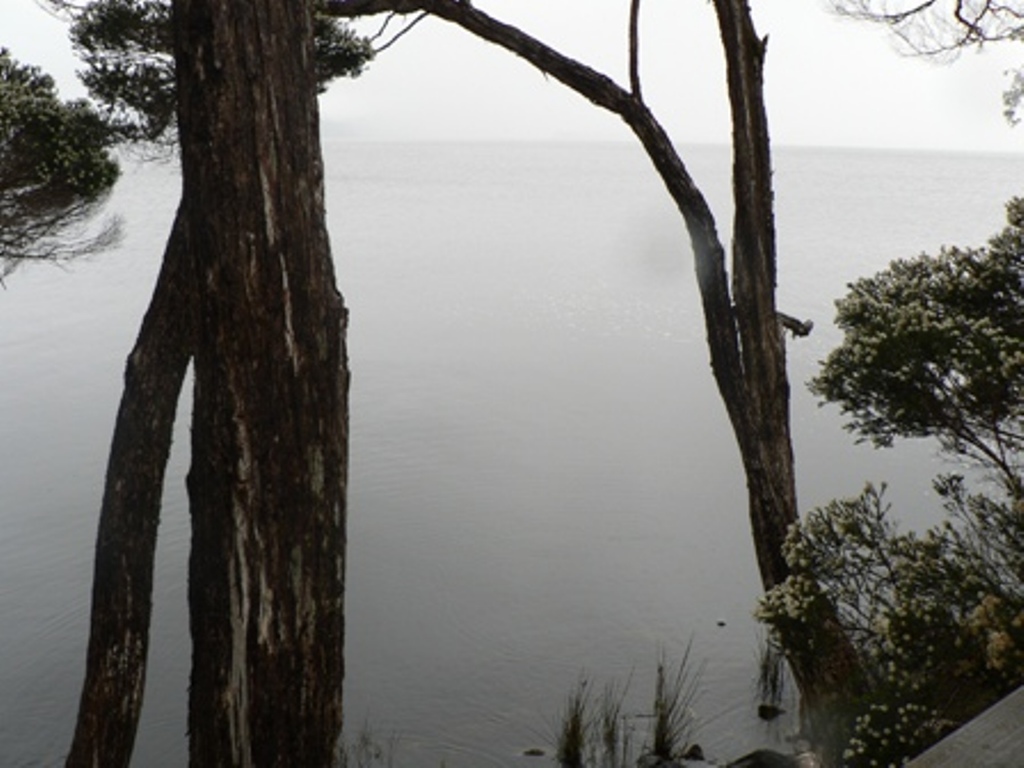
I remembered: the cold on my hands, wrinkle skin and dry. I aim the camera. There was something in the air, something in the quiet water. Something that felt like decimation.
After taking this photo ideas began to form. Ideas belonging to the dream I had had a few months prior about the woman in a car and her child. Then this.
I wrote them down. Who knows where that notebook is now (I suspect somewhere at the bottom of a box in the garage) but I have remembered this photo and now I have a visualisation. The photo has reappeared at the right time for the second project. Now I am thinking about those lost feelings again, the way they will tie back to the characters that are forming, the way they will tie to the projects different forms of decimation, different forms of trauma. The new project is slowly worming its way out from abstract ideas into something that will boom my blood.
I should stop calling it the second project and begin to refer to it as the working title: Blue Mountain.
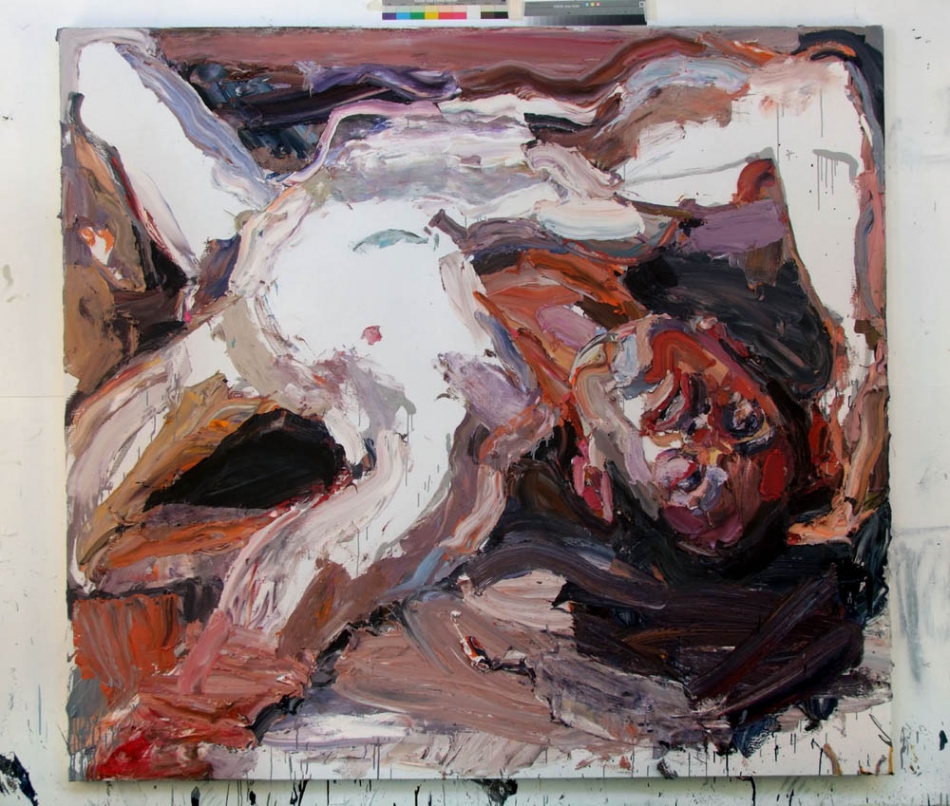
Ben Quilty – Captain S from After Afghanistan 2012
1926: ‘At luncheon Dr. Jones said that the Mont Park institution could accommodate 1,400 patients.’
1924: ‘In Their Own Interests.
Emphatic assurances that returned soldier mental patients at Mont Park, who have been transferred from the control of the Repatriation department to the State authorities will benefit by the change, were given by the Chief Secretary (Dr. Argyle) yesterday.
Dr. Argyle said that the patients would be cared for by the same medical men and attendants who had looked after them previously, and there would be no question of keeping the military cases in the same quarters as the civil cases. He was a re-turned soldier himself, and as long as headministered the Chief Secretary’s department they would be kept apart. Until the military mental cases were provided for, patients could not be removed from the Yarra Bend Asylum. The position was that nearly the whole of the Mont ParkAsylum was empty, because one wing and the kitchens were occupied by the repatriation officials. Until the State authorities obtained the use of the accommodation they could not accept any more patients for treatment at Mont Park.’
1920: ‘Soldier claims damages.Doctors and Constable Sued.
A Supreme Court writ claiming £3.000 as damages has been issued by Frederick Charles Nolan, returned soldier, against W. B. Heyward, Joseph Thomas Hollow, and Terence McSweeney, medical prac-titioners, of Mont Park military hospital;William Ernest Jones, Inspector-Generalof Hospitals for the Insane; and WilliamWard and Thomas Oswald Morris, cons-tables of police, in respect of Nolan’s re-moval from his home to a military hos-pital. It is alleged by the plaintiff that on or about December 23, 1919, the constables. entered his home in Armstrong street, Ballarat, where he resided with his mother, assaulted him, and forcibly re-moved him to the cells at the local watch house, and subsequently to the Mont Park military hospital, where he was detained until May 8 last. On that date, under a writ of habeas corpus, he was discharged by a justice of the Supreme Court.’



 Sarah Schmidt Writes